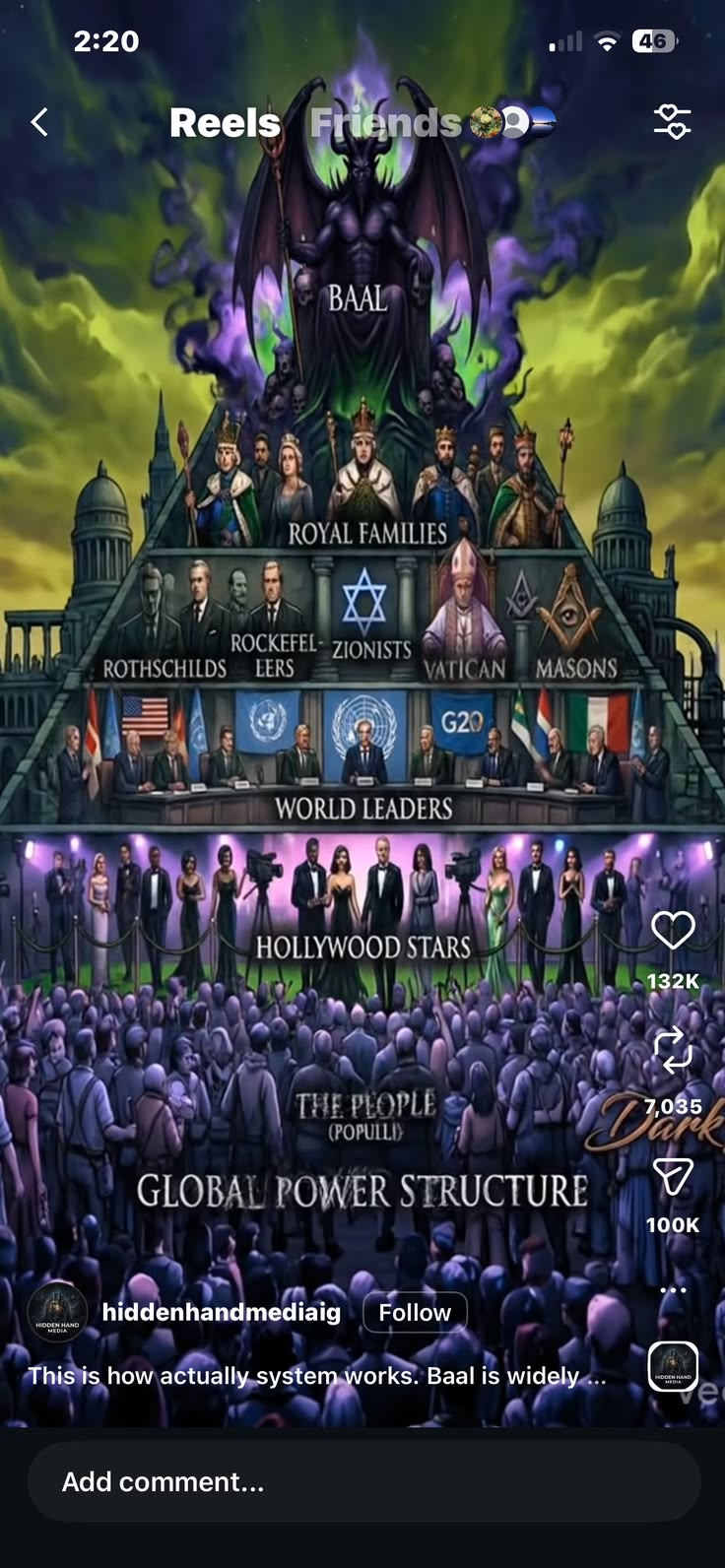
In a world shaped by complex political dynamics and unseen forces, the true power often lies far beneath the surface. Elite power structures and hidden cults have long been subjects of intrigue, speculation, and controversy, influencing decisions that ripple across nations and shape global affairs in profound ways. From secret societies operating behind closed doors to influential networks steering economic and political agendas, these shadowy entities play a role that is both fascinating and unsettling. In this blog post, we will delve into the mysterious world of elite power and clandestine groups, uncovering their origins, motivations, and the significant impact they have on the course of history and contemporary international relations. Join us as we unveil the secrets that lie at the heart of global power dynamics.
1. Introduction: Understanding Elite Power and Hidden Cults
In today’s complex and interconnected world, the influence of elite power structures and hidden cults remains a topic shrouded in mystery and intrigue. These groups, often operating behind closed doors and away from public scrutiny, wield significant control over political decisions, economic policies, and social dynamics on a global scale. Understanding the nature of elite power involves delving into how a select few—whether political leaders, wealthy individuals, or secretive organizations—shape the course of history and current events. Hidden cults, on the other hand, add another layer of complexity, as their clandestine rituals, beliefs, and networks can subtly influence cultural trends, ideological movements, and even policy-making. This section sets the stage for exploring how these forces intersect, the mechanisms through which they maintain their influence, and the profound impact they have on global affairs. By unveiling these secrets, we aim to foster a deeper awareness of the hidden dynamics that shape our world and encourage critical thinking about the power structures that often go unnoticed.
2. Historical Background of Elite Power Structures
The concept of elite power structures has existed throughout human history, shaping societies and influencing the course of global events. From ancient civilizations to modern nation-states, a select group of individuals or families have often consolidated wealth, political authority, and social influence to maintain control over resources and decision-making processes. In ancient Egypt, for example, pharaohs and their inner circles wielded immense power, believed to be divinely ordained. Similarly, feudal societies in medieval Europe were dominated by aristocrats and monarchs whose authority was reinforced through land ownership and hereditary privilege.
As history progressed, these power structures evolved but remained fundamentally centered around exclusivity and control. The rise of colonial empires saw elite classes extend their reach across continents, exploiting resources and populations to enrich themselves and their nations. In the modern era, elite power has taken on new forms, including multinational corporations, influential political families, and secretive organizations that operate behind the scenes. These groups often leverage economic dominance, media influence, and covert networks to shape policies and global affairs, sometimes operating beyond the scrutiny of the general public.
Understanding the historical foundations of elite power is crucial to unpacking how these structures persist today and continue to impact international relations, economic inequalities, and social dynamics. By examining their origins and transformations, we gain insight into the mechanisms of influence that underpin many of the world’s most significant events and decisions.
3. Defining Hidden Cults and Their Characteristics
Hidden cults often operate in the shadows, away from the public eye, making them difficult to identify and understand. Unlike mainstream organizations, these groups typically maintain a strict level of secrecy around their beliefs, rituals, and membership. At their core, hidden cults are characterized by their exclusive nature, often requiring unwavering loyalty from members and employing psychological manipulation to maintain control. They may use coded language, secret symbols, or clandestine meetings to preserve their anonymity and protect their agendas.
These cults are not merely fringe social groups; many wield significant influence by embedding themselves within political, economic, or social structures. Their impact can be subtle yet profound, shaping decisions and policies behind closed doors. Common characteristics of hidden cults include a charismatic and authoritarian leader, a rigid hierarchical structure, a distinct set of esoteric beliefs, and an ‘us versus them’ mentality that isolates members from outsiders.
Understanding these traits is crucial in unpacking how hidden cults operate and the roles they play in global affairs. By defining what sets them apart, we can begin to unravel the complex web of elite power and covert influence that shapes world events in ways often unseen by the public.
4. The Connection Between Elite Power and Secret Societies
Throughout history, elite power and secret societies have often been intertwined, shaping political, economic, and social landscapes from behind the scenes. These clandestine groups, ranging from centuries-old fraternal orders to modern underground networks, are believed to wield influence by controlling access to wealth, information, and decision-making arenas. Members of these secret societies typically come from the upper echelons of society—politicians, business magnates, influential thinkers, and cultural icons—who use their collective power to advance agendas that are often hidden from the public eye.
The connection lies not only in shared membership but also in the strategic collaboration these groups foster. Through exclusive rituals, coded communication, and tightly guarded alliances, secret societies create a sense of loyalty and trust among their members, enabling coordinated efforts that can impact global affairs. Whether it’s steering financial markets, influencing policy decisions, or orchestrating social movements, the synergy between elite power and secret societies creates a potent force that can operate beyond the reach of conventional oversight or accountability.
Understanding this connection offers insight into how certain decisions and events unfold on the world stage, often appearing mysterious or inexplicable without recognizing the underlying networks at play. While much remains speculative, uncovering these links helps shed light on the mechanisms through which elite power consolidates and perpetuates itself, reminding us of the complex layers beneath the surface of global governance.
5. Notable Elite Groups and Their Influence on Politics
Throughout history, various elite groups have exerted significant influence over political landscapes, shaping policies and global affairs behind the scenes. These groups often consist of powerful individuals from political, financial, and social spheres who collaborate to protect their interests and maintain control. Among the most notable are organizations like the Bilderberg Group, the Council on Foreign Relations, and the Trilateral Commission. While these groups operate with varying degrees of transparency, their meetings and decisions often set the tone for international diplomacy, economic strategies, and security policies.
Beyond these well-documented organizations, secretive societies and hidden cults have long been subjects of intrigue and speculation. Groups such as the Illuminati or Freemasons are frequently cited in conspiracy theories alleging covert manipulation of governments and economies. Whether grounded in fact or fiction, the influence of such groups highlights the complex interplay between power, secrecy, and governance. Understanding these elite entities provides crucial insight into how global affairs are navigated and negotiated away from the public eye, revealing the subtle yet profound ways they shape the world we live in.
6. Case Studies: Hidden Cults in Global Affairs
Throughout history, hidden cults and secret societies have often operated behind the scenes, influencing political decisions, economic policies, and social movements across the globe. In this section, we explore several compelling case studies that shed light on how these enigmatic groups have shaped global affairs in subtle yet profound ways.
One notable example is the influence of the Bilderberg Group, an annual private conference attended by political leaders, industry experts, and elite figures from around the world. While not a cult in the traditional sense, the group’s secretive meetings have fueled speculation about its role in steering international policy and economic strategies. Critics argue that such exclusivity undermines democratic transparency and concentrates power in the hands of a few.
Another intriguing case is the Bohemian Grove, a secluded California retreat where powerful figures gather annually for rituals and discussions. The Bohemian Club’s gatherings, shrouded in mystery and symbolism, have sparked debates about the extent to which its members’ decisions impact global governance and economic trends.
Additionally, historical secret societies such as the Freemasons have long been associated with political intrigue and social influence. Though much of their lore is steeped in myth, evidence suggests that Masonic networks have played roles in shaping revolutions, nation-building, and cultural movements worldwide.
These case studies illustrate how hidden cults and elite groups, through their clandestine activities and exclusive networks, can exert significant sway over global events. Understanding their mechanisms provides valuable insight into the complexities of power and influence that shape our world today.
7. Methods of Influence: How Elite Power Shapes Policy
Elite power shapes policy through a complex web of methods that often operate behind the scenes, subtly steering the direction of global affairs. One of the primary tools at their disposal is lobbying—where influential individuals and organizations directly engage with lawmakers to advocate for legislation that aligns with their interests. This practice, while a formal part of democratic systems, can sometimes blur the lines between public good and private gain.
Beyond lobbying, elite groups leverage their vast financial resources to fund political campaigns, think tanks, and media outlets, effectively shaping public discourse and policy priorities. By controlling narratives and framing issues in particular ways, they can sway public opinion and pressure policymakers to act in favor of their agendas.
Another method involves establishing exclusive networks and secretive meetings where key decision-makers from government, business, and finance converge. These gatherings facilitate the exchange of information, coordination of strategies, and consolidation of power away from public scrutiny. In some cases, hidden cult-like organizations or societies serve as channels for influence, perpetuating ideologies and agendas that impact policy on both national and international levels.
Through these multifaceted approaches—combining financial clout, media control, strategic relationships, and covert operations—elite power continuously shapes policies that maintain and extend their influence, often at the expense of transparency and democratic accountability. Understanding these methods is crucial to unraveling how hidden forces steer the course of global affairs.
8. The Role of Media and Information Control
In the intricate web of global affairs, media and information control play a pivotal role in shaping public perception and influencing decision-making processes. Elite power structures and hidden cults often leverage media platforms to disseminate carefully curated narratives, ensuring their agendas remain unchallenged and their influence pervasive. By controlling the flow of information—whether through mainstream news outlets, social media channels, or covert propaganda—they can manipulate public opinion, obscure inconvenient truths, and maintain a veil of secrecy around their activities.
This manipulation isn’t limited to overt censorship; it extends to framing stories in ways that favor certain interests, selectively highlighting or suppressing events, and employing sophisticated disinformation campaigns. The result is a landscape where truth becomes malleable, and the average individual struggles to discern fact from fiction. Understanding the mechanisms behind media control is essential to unraveling how these elite groups sustain their power and shape the geopolitical environment to suit their objectives. In this section, we delve into the strategies employed to dominate information channels and the profound implications this has on democracy, transparency, and global stability.
9. Economic Impacts of Elite Networks and Secret Societies
Elite networks and secret societies have long been subjects of intrigue and speculation, often portrayed as shadowy groups wielding significant influence over global economic systems. While much of their activities remain concealed from public view, their economic impacts can be profound and far-reaching. These networks frequently operate through complex webs of political connections, financial institutions, and multinational corporations, enabling them to shape markets, influence policy decisions, and direct capital flows in ways that serve their interests.
One of the primary economic impacts of such elite groups is their ability to perpetuate wealth concentration. By leveraging insider access and exclusive information, they can orchestrate investment strategies that maximize returns while minimizing risk, often sidelining smaller players and reinforcing economic inequality. Additionally, secret societies and elite networks may facilitate discreet agreements and alliances that circumvent traditional regulatory frameworks, allowing for tax optimization, monopolistic practices, or control over strategic industries such as energy, finance, and technology.
Moreover, their influence can extend to the global stage where they might drive economic agendas that align with geopolitical objectives, such as funding select infrastructure projects, steering trade agreements, or orchestrating economic sanctions. These actions not only impact global markets but can also affect the economic stability of nations, sometimes exacerbating disparities between developed and developing countries.
Understanding the economic impacts of these clandestine groups is essential for comprehending the broader dynamics of global affairs. While transparency and accountability remain challenges, increased scrutiny and research into elite networks can help illuminate their role in shaping the world economy, ultimately contributing to more equitable and informed policy-making.
10. Conspiracy Theories vs. Verified Facts
In the realm of elite power and hidden cults, it’s easy to get swept up in sensational conspiracy theories that capture the imagination and fuel endless speculation. However, distinguishing between conspiracy theories and verified facts is crucial for gaining a clear and accurate understanding of their true impact on global affairs. Conspiracy theories often rely on anecdotal evidence, speculative connections, and unverifiable claims, which can distort reality and create misleading narratives. On the other hand, verified facts emerge from credible sources, thorough investigations, and corroborated data that withstand rigorous scrutiny. By critically examining the evidence and seeking out reputable research, we can separate myth from reality and develop a more nuanced perspective on how elite power structures and clandestine groups influence political, economic, and social dynamics worldwide. This balanced approach not only fosters informed discussions but also helps prevent the spread of misinformation that can undermine public trust and obscure the complex truths behind global events.
11. Public Perception and Awareness of Elite Power
Public perception and awareness of elite power play a crucial role in shaping how societies understand and respond to the influence exerted by powerful individuals and secretive groups. For decades, the notion of elite power—whether held by political leaders, wealthy families, or clandestine organizations—has been shrouded in mystery, often fueling speculation, conspiracy theories, and widespread distrust. Media portrayal, government transparency, and access to information significantly impact public awareness. In many cases, elite power operates behind closed doors, making it difficult for the average person to discern the true extent of their influence.
However, increased access to investigative journalism, whistleblower revelations, and digital communication platforms has gradually illuminated some aspects of these hidden dynamics. As awareness grows, public perception shifts, sometimes leading to heightened scrutiny, activism, and calls for accountability. Yet, this awareness is often fragmented and influenced by cultural, political, and social factors, which can either amplify or diminish concerns about elite power. Understanding how the public perceives these forces is essential to grasp the broader implications for democracy, governance, and global affairs. It also highlights the ongoing tension between secrecy and transparency that defines much of the discourse surrounding elite influence in the modern world.
12. Challenges in Investigating Hidden Cults
Investigating hidden cults presents a unique set of challenges that can make uncovering the truth a complex and often dangerous endeavor. These secretive groups operate under layers of secrecy, employing strict codes of silence among members and sophisticated methods to avoid detection. The clandestine nature of their activities means that reliable information is scarce, and those who attempt to expose them may face intimidation, misinformation campaigns, or even threats to their personal safety. Additionally, the psychological grip cults hold over their members can make it difficult for insiders to come forward or provide credible testimony. Law enforcement and researchers often struggle with limited resources and legal constraints when probing these organizations, especially when they have connections to powerful elites or political entities. All these factors combine to create formidable obstacles, requiring investigators to exercise patience, discretion, and a deep understanding of both the social dynamics within cults and the broader geopolitical implications of their influence.
13. The Future of Elite Influence in a Globalized World
As the world becomes increasingly interconnected through technology, trade, and communication, the influence of elite groups is evolving in unprecedented ways. In a globalized world, traditional boundaries—whether national, cultural, or economic—are blurred, allowing elite networks and hidden cults to extend their reach far beyond local or regional confines. These groups leverage advanced technologies, financial systems, and political alliances to shape global policies, economies, and even social narratives.
Looking ahead, the future of elite influence is likely to be characterized by greater sophistication and subtlety. Digital platforms will serve as both tools and battlegrounds where information is carefully curated and disseminated to maintain power structures. Elite actors may increasingly operate through decentralized and opaque channels, making their activities harder to trace and counteract. At the same time, resistance movements and transparency initiatives are growing stronger, empowered by grassroots activism and technological innovations aimed at exposing hidden agendas.
Understanding this dynamic is crucial for anyone seeking to grasp how global affairs are shaped behind the scenes. As elite influence adapts to the challenges and opportunities of globalization, the balance of power will continue to shift—impacting everything from international diplomacy to economic development and social justice. Staying informed and vigilant about these evolving forces will be key to navigating the complex landscape of the twenty-first century.
14. How Individuals Can Stay Informed and Engage
In a world where elite power structures and hidden cults often operate behind closed doors, staying informed can feel like navigating a complex maze. However, individuals have more tools than ever to uncover the truth and engage meaningfully with these topics. The first step is cultivating a habit of critical thinking—questioning sources, seeking out multiple perspectives, and distinguishing between credible information and conspiracy theories. Reliable news outlets, investigative journalism platforms, and scholarly publications can provide well-researched insights into the dynamics of global power and secretive groups.
Additionally, engaging in community discussions, whether through online forums, social media groups, or local meetups focused on political awareness and transparency, allows individuals to share knowledge and challenge misinformation collectively. Participating in advocacy and transparency initiatives can also amplify your impact—supporting organizations that promote open government, human rights, and accountability helps bring hidden activities to light.
Finally, staying informed requires ongoing effort: setting aside regular time for reading, following experts and whistleblowers, and remaining open to updating your views as new information emerges. By taking these proactive steps, individuals not only empower themselves but contribute to a more informed and accountable global society.
15. Conclusion: Reflecting on Transparency and Accountability
As we conclude our exploration into the intricate world of elite power and hidden cults, it becomes clear that transparency and accountability are more crucial than ever in shaping global affairs. These shadowy networks, often operating behind closed doors, wield influence that can alter political landscapes, economic policies, and social dynamics on a massive scale. Yet, their secrecy poses significant challenges to democratic institutions and public trust. Reflecting on the information uncovered, it is evident that fostering openness—through investigative journalism, whistleblower protections, and robust legal frameworks—is essential to dismantling undue influence and ensuring that power serves the many, not just the few. Ultimately, only by shining a light on these hidden forces can societies work toward greater justice, equity, and informed citizen participation in the governance of our world.
Delving into the intricate world of elite power and hidden cults reveals a complex web of influence that shapes global affairs in profound and often unseen ways. By uncovering these secretive networks and understanding their motives, we gain valuable insight into the forces driving political decisions, economic shifts, and social dynamics across the world. While much remains shrouded in mystery, staying informed and critically aware empowers us to navigate the modern landscape with a clearer perspective. As we continue to explore these hidden realms, one thing is certain: the impact of elite power is both pervasive and undeniable, reminding us of the importance of vigilance and transparency in safeguarding our collective future.
——————————
 fauxcroft
Leave a comment