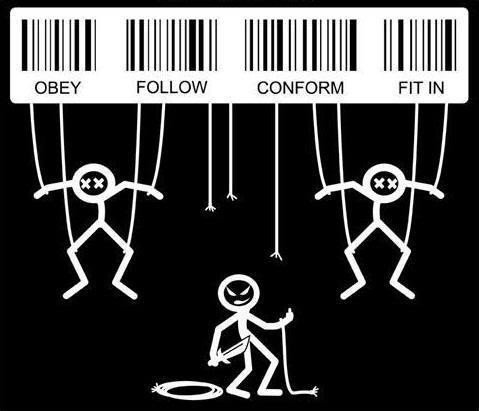
In the age of unprecedented technological advancement, our lives have become increasingly intertwined with the digital world. While the benefits of this interconnectedness are undeniable, there is a darker side to this phenomenon – a pervasive surveillance state that threatens to suffocate our individuality, autonomy, and humanity. As we navigate the complex landscape of social media, online tracking, and government monitoring, it’s easy to feel like we’re living in a dystopian novel. Our every move, thought, and preference is being watched, recorded, and manipulated, eroding our privacy, freedom, and sense of self. But it’s not too late to resist. In this post, we’ll explore the ways in which the surveillance state is undermining our humanity, and more importantly, we’ll uncover the rebel code – a set of strategies, tools, and mindset shifts that will empower you to break free from the shackles of surveillance and reclaim your autonomy, creativity, and individuality.
1. The Rise of the Surveillance State: How We Got Here
The air is thick with the weight of invisible eyes, watching, tracking, and monitoring our every move. We live in a world where the lines between public and private have been blurred, and the notion of personal freedom has become a fleeting illusion. The Surveillance State, once a dystopian concept relegated to the realm of science fiction, has become our stark reality. But how did we get here? The journey to this Orwellian present was a gradual one, paved by the well-intentioned but misguided efforts of governments and corporations to ensure our safety and security. The 9/11 attacks marked a turning point, as governments began to justify the erosion of civil liberties in the name of national security. The Patriot Act, passed in the aftermath, granted unprecedented powers to law enforcement agencies, allowing them to collect and analyze data on a massive scale. Meanwhile, the rise of social media and online platforms created a culture of rampant data sharing, where users willingly surrendered their personal information in exchange for convenience and connectivity. The result is a surveillance apparatus that is both ubiquitous and insidious, where every click, every swipe, and every conversation is tracked, recorded, and analyzed. We are now living in a world where our every move is monitored, and our humanity is slowly being reduced to a series of data points.
2. The Costs of Surveillance: What We’ve Lost
The costs of surveillance are far-reaching and devastating, silently eroding the very fabric of our society. As we’ve traded our privacy for the convenience of technology and the illusion of security, we’ve lost something much more valuable than we ever could have imagined. We’ve lost the freedom to be ourselves, to think freely, to create without fear of judgment, and to live without the weight of constant scrutiny.
The surveillance state has created a culture of self-censorship, where individuals are hesitant to speak their minds, share their thoughts, or express their opinions, lest they be monitored, recorded, and judged. The fear of being watched has stifled creativity, silenced dissent, and crushed innovation. We’ve lost the beauty of spontaneity, the thrill of discovery, and the joy of connecting with others without the burden of being watched.
Moreover, the surveillance state has also taken a toll on our mental and emotional well-being. The constant feeling of being watched, the anxiety of being judged, and the fear of being punished have created a society of anxious, stressed, and depressed individuals. We’ve lost the sense of safety, the comfort of privacy, and the peace of mind that comes with knowing we’re not being monitored 24/7.
The costs of surveillance are not just abstract concepts; they’re tangible, measurable, and devastating. They’re the erosion of our humanity, the stifling of our creativity, and the destruction of our freedom. As we continue to surrender our privacy to the surveillance state, we’re not just losing our freedom; we’re losing ourselves.
3. The Myth of Security: How Surveillance Fails to Protect Us
The notion that surveillance is the key to security is a pervasive myth that has been perpetuated by governments and corporations alike. We’ve been led to believe that the more we sacrifice our privacy, the safer we’ll be. But the truth is, the surveillance state has failed to deliver on its promises. In fact, the opposite is often true. The vast amounts of data collected by governments and corporations have created a honeypot of sensitive information, ripe for exploitation by malicious actors. From data breaches to cyber attacks, the very systems designed to protect us have become the very vulnerabilities that put us at risk.
Furthermore, the surveillance state has been shown to be ineffective in preventing terrorism, crime, and other threats to public safety. Studies have consistently demonstrated that mass surveillance programs have failed to prevent terrorist attacks, and have instead led to a culture of fear, mistrust, and discrimination. The staggering costs of these programs, both financial and social, have been justified by the false promise of security. Meanwhile, the real threats to our safety and well-being – from climate change to economic inequality – continue to be ignored or exacerbated by the very systems that claim to protect us. It’s time to shatter the myth of security and reclaim our humanity from the grip of the surveillance state.
4. The Case for Rebellion: Why We Need to Take a Stand
We are at a crossroads, where the very fabric of our society is being threatened by the insidious creep of surveillance and control. The notion of privacy, once a fundamental human right, has been reduced to a distant memory, a relic of a bygone era. Our every move, our every thought, our every interaction is being monitored, tracked, and analyzed, often without our knowledge or consent. The consequences of this unchecked surveillance are far-reaching and devastating, eroding our autonomy, stifling our creativity, and suffocating our very sense of self.
In this dystopian landscape, the notion of rebellion is not only a moral imperative but a necessary act of self-preservation. We must recognize that our collective acquiescence to the surveillance state has led to a slow-motion coup, where the powerful few dictate the terms of our existence, and the many are relegated to mere pawns in their game of control. It is time to reclaim our humanity, to reassert our right to privacy, to challenge the status quo, and to forge a new path, one that prioritizes freedom, autonomy, and the dignity of the human spirit. The case for rebellion is clear: our very way of life depends on it.
5. The Power of Code: How Technology Can Be a Force for Good
In the midst of the surveillance state’s suffocating grip, it’s easy to lose sight of the transformative power of technology. But amidst the darkness, there is a beacon of hope. Code, the very fabric of our digital existence, has the potential to be a powerful force for good. It’s time to reclaim it.
Imagine a world where technology is designed to empower, not control. Where code is crafted to protect, not exploit. Where the digital landscape is a reflection of our collective values, rather than a tool for manipulation.
This is not a utopian fantasy, but a tangible reality that can be achieved through conscious design and intentional innovation. By harnessing the power of code, we can create systems that prioritize privacy, autonomy, and transparency. We can build platforms that foster connection, collaboration, and creativity, rather than division and surveillance.
The rebels among us are already doing this. They’re crafting decentralized networks that resist the grip of centralized control. They’re developing open-source tools that put power in the hands of the people. They’re creating digital sanctuaries that prioritize human well-being over corporate profit.
The power of code is not just a tool for resistance; it’s a catalyst for revolution. It’s time to reclaim our digital destiny and forge a future where technology serves humanity, rather than the other way around. The code is mightier than the surveillance state, and it’s up to us to wield it.
6. Encryption and Anonymity: The Tools of the Rebel
In the dark alleys of the digital world, where prying eyes and ears lurk around every corner, the rebel code relies on two powerful allies to maintain its freedom: encryption and anonymity. These twin sentinels stand guard against the encroaching forces of surveillance, protecting the rebel’s digital identity and communications from unwanted scrutiny.
Encryption, the art of scrambling data into an unreadable code, is the rebel’s shield against interception. By encrypting emails, messages, and files, the rebel ensures that even if their digital trail is intercepted, the contents remain inaccessible to the snoopers. It’s like hiding a secret message in plain sight, where only the intended recipient can decipher the code.
Anonymity, on the other hand, is the rebel’s cloak of invisibility. By using tools like VPNs, Tor browsers, and anonymous networks, the rebel can mask their IP address, location, and online identity, making it impossible for the surveillance state to track their digital movements. It’s like donning a digital disguise, allowing the rebel to move undetected through the digital landscape.
Together, encryption and anonymity form an unbreakable bond, empowering the rebel to communicate, share, and organize without fear of reprisal. They are the tools of the digital resistance, allowing individuals to reclaim their autonomy and humanity in a world where privacy is increasingly under siege. By wielding these powerful tools, the rebel code can break free from the shackles of surveillance and forge a new path towards freedom and self-expression.
7. Building Alternative Systems: A New Way of Living
As we awaken to the harsh realities of the surveillance state, it becomes clear that our only hope for reclaiming our humanity lies in building alternative systems that prioritize freedom, autonomy, and community. We must dare to imagine a world where technology serves humanity, rather than the other way around. This requires a fundamental shift in how we live, work, and interact with one another. It’s time to break free from the shackles of corporate-controlled platforms and government-backed surveillance, and instead, create decentralized, open-source systems that empower individuals and communities.
Imagine a world where social media platforms are community-owned and operated, where data is decentralized and encrypted, and where online interactions are based on mutual respect and trust. Envision cities powered by renewable energy, where sustainable living and local economies thrive. Picture a society where education is free and accessible to all, where knowledge is shared openly, and where creativity is nurtured and celebrated.
By building alternative systems, we can create a new way of living that is rooted in cooperation, empathy, and mutual aid. We can create a world where humanity is valued above profit, where people are treated as individuals rather than data points, and where our collective well-being is prioritized above the interests of the powerful few. The time for revolution is now. The time for building a better world is now.
8. The Importance of Digital Literacy: Empowering Ourselves
In today’s digital landscape, it’s easy to feel like we’re drowning in a sea of ones and zeros, with our personal data and online activities being harvested and exploited by corporations and governments alike. But what if we could take back control? What if we could empower ourselves with the knowledge and skills to navigate the digital world on our own terms? This is where digital literacy comes in – the ability to understand, use, and critically evaluate digital technologies to make informed decisions about our online lives.
In an era where our every move is tracked, monitored, and analyzed, digital literacy is no longer a luxury, but a necessity. It’s the key to unlocking our freedom from the surveillance state, and reclaiming our humanity in the process. By educating ourselves on the inner workings of the digital world, we can begin to make conscious choices about the data we share, the platforms we use, and the companies we support. We can learn to spot the hidden dangers of online manipulation, and develop strategies to protect ourselves from the prying eyes of Big Tech and Big Brother.
With digital literacy, we can break free from the shackles of algorithmic oppression, and start to build a more just and equitable online society. We can create a world where technology serves humanity, rather than the other way around. It’s time to take back our digital sovereignty, and reclaim our right to privacy, autonomy, and self-expression. The future of our humanity depends on it.
9. The Role of Activism: How to Effect Change
In a world where our every move is tracked, monitored, and controlled, it’s easy to feel like we’re mere pawns in a game of surveillance and manipulation. But it’s precisely in these moments of darkness that the spark of activism can ignite a beacon of hope. By mobilizing our collective voices, energies, and passions, we can challenge the status quo and reclaim our humanity from the clutches of the surveillance state.
Effective activism is not about grandstanding or virtue-signaling; it’s about rolling up our sleeves, getting our hands dirty, and committing to sustained efforts that bring about tangible change. It’s about building coalitions, mobilizing communities, and creating a groundswell of resistance that can’t be ignored. It’s about using our unique skills, talents, and perspectives to amplify the message of freedom, autonomy, and dignity.
Whether it’s through online campaigns, grassroots organizing, or direct action, activism has the power to disrupt the surveillance machinery and reclaim our agency as individuals. By supporting whistleblower protections, advocating for privacy-preserving technologies, and pushing for policy reforms that prioritize human rights, we can create a society that values freedom over control, and autonomy over coercion. The role of activism is not just to resist the surveillance state, but to reimagine a world where our humanity is celebrated, not suffocated.
10. Creating a Culture of Resistance: Inspiring Others to Join
As we embark on this journey of rebellion, it’s essential to recognize that we’re not alone. There are countless individuals who share our concerns and are eager to join the fight against the surveillance state. However, they may not know where to start or how to take action. This is where we come in – as leaders, motivators, and catalysts for change.
Creating a culture of resistance requires more than just individual action; it demands a collective effort to inspire and mobilize others. We must become the spark that ignites the flame of resistance, empowering others to join us in this critical fight. By sharing our stories, our struggles, and our triumphs, we can create a sense of community and solidarity that transcends borders and boundaries.
Imagine a world where people from all walks of life come together to challenge the status quo, to question the authorities, and to demand a better future. Imagine a world where individuals are no longer isolated, but united in their pursuit of freedom, privacy, and autonomy. This is the world we can create, but it requires us to take the first step – to inspire, to educate, and to empower others to join the rebellion.
By creating a culture of resistance, we can break down the barriers of fear, apathy, and ignorance that have held us back for so long. We can create a movement that is inclusive, diverse, and unstoppable. We can reclaim our humanity, our dignity, and our right to live in a world that is free from the shackles of surveillance and control. The time to act is now. The time to inspire is now. Let us rise up, together, and create a brighter future for all.
11. The Future of Humanity: What’s at Stake
As we stand at the precipice of a surveillance state, the very fabric of our humanity hangs in the balance. The notion of a future where our every move, thought, and desire is monitored, tracked, and controlled is a chilling prospect. The consequences of inaction are dire: a world where autonomy is a distant memory, creativity is stifled, and individuality is reduced to a mere illusion. The surveillance state seeks to suffocate our collective soul, replacing it with a culture of fear, conformity, and obedience.
In this dystopian future, the boundaries between public and private spaces are erased, and our most intimate moments are surrendered to the prying eyes of the state. The beauty of human connection, the thrill of discovery, and the pursuit of knowledge are all reduced to mere data points, harvested and analyzed to predict and manipulate our behavior. The future of humanity is not just about the loss of privacy, but about the erosion of our essential humanity.
We are at a crossroads, where the choices we make today will determine the course of our collective future. Will we succumb to the allure of convenience and surrender to the all-seeing eye of the surveillance state, or will we reclaim our autonomy, our creativity, and our humanity? The fate of our world hangs in the balance, and it is up to us to decide what kind of future we want to create.
12. A Call to Action: Joining the Rebel Code Movement
As we conclude our journey through the eerie landscape of surveillance capitalism, it’s time to transform our outrage into action. The Rebel Code is more than just a manifesto – it’s a call to arms, a rallying cry for all those who refuse to be silenced, tracked, and manipulated. We’re not just fighting against the erosion of our privacy, but for the very essence of our humanity. It’s time to reclaim our autonomy, our creativity, and our freedom.
The Rebel Code Movement is a beacon of hope, a collective of individuals who dare to challenge the status quo. We’re not asking for permission to resist; we’re taking back control. By joining this movement, you’ll be part of a vibrant community that’s committed to creating a better future – one where technology serves humanity, not the other way around.
Together, we’ll challenge the dominant narratives, support alternative technologies, and create new models of governance that prioritize people over profit. We’ll organize, we’ll educate, and we’ll mobilize. We’ll create a world where our data is our own, where our voices are heard, and where our humanity is valued above all else.
So, what are you waiting for? Join the Rebel Code Movement today. Share your story, spread the word, and let’s rise up against the forces of surveillance and control. Together, we can create a brighter, more rebellious future – one where humanity is free to thrive.
13. Conclusion: Reclaiming Our Humanity in a Surveillance State
As we conclude our journey through the treacherous landscape of the surveillance state, it’s clear that the stakes have never been higher. The battle for our humanity, our autonomy, and our freedom is being waged on multiple fronts, from the dark alleys of online tracking to the watchful eyes of AI-powered surveillance systems. But it’s not too late to fight back. By recognizing the insidious threats to our privacy, by demanding accountability from those who would seek to control us, and by embracing a culture of resistance and defiance, we can reclaim our humanity in the face of an increasingly oppressive surveillance state. The rebel code is not just a call to action, but a declaration of our refusal to surrender to a future of constant monitoring, manipulation, and control. It’s a beacon of hope in a world that often seems too dark, too dystopian, and too entrenched in the status quo. So let us rise up, let us resist, and let us reclaim our humanity – for the sake of our freedom, our dignity, and our very souls.
As we conclude our journey through the realm of surveillance and control, we hope that you’ve been inspired to join the rebellion against the eroding forces of our privacy and autonomy. The tools of oppression may be powerful, but our collective resistance can be even stronger. By embracing the principles of the Rebel Code, we can reclaim our humanity, forge a new path, and create a future where freedom, creativity, and individuality thrive. The revolution starts now – will you join the fight?
——————————
Image courtesy of pinterest

 fauxcroft
Leave a reply to myrelar Cancel reply