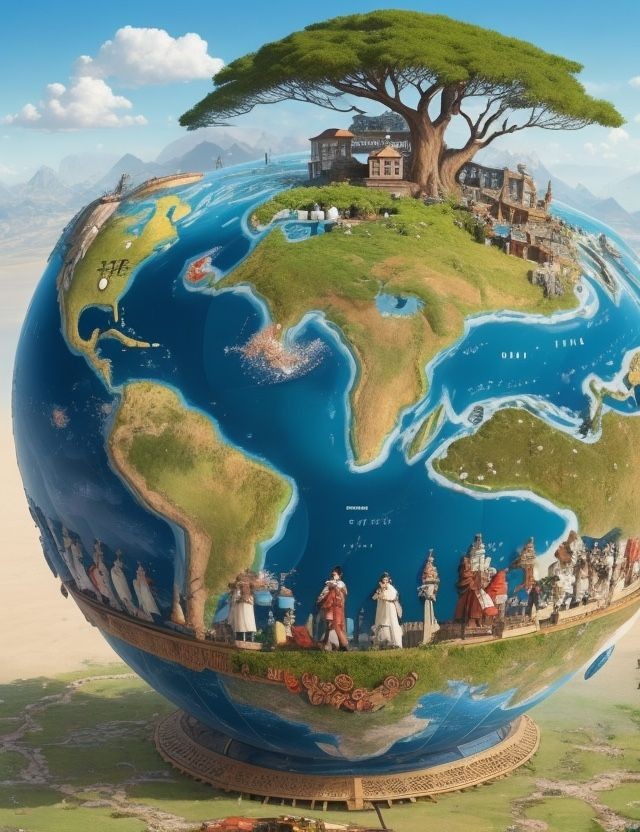
In an increasingly interconnected world, the hope for peace and unity often seems overshadowed by the stark realities of conflict and division. Yet, the desire for a harmonious existence is more potent than ever, igniting conversations that transcend geographical boundaries and cultural differences. “Beyond Borders: Envisioning a Future Without War and Division” invites readers to explore the transformative possibilities of a world where empathy, understanding, and collaboration reign supreme. This blog post will delve into the innovative ideas, grassroots movements, and visionary thinkers who are tirelessly working to create a future where nations and individuals come together, fostering a global community built on trust and mutual respect. Join us on this journey as we imagine a world where peace is not just a dream, but a tangible reality, waiting to be realized. Together, we can illuminate the path toward a brighter, more unified future.
1. Introduction: The Concept of a Borderless World
In an era marked by unprecedented technological advancements and global interconnectedness, the notion of a borderless world emerges as a beacon of hope—a vision where humanity transcends the divisions that have long defined our existence. Imagine a planet where cultural, ideological, and economic barriers dissolve, allowing people to move freely, communicate openly, and collaborate across geographical boundaries. This concept challenges the traditional frameworks of nation-states, inviting us to reimagine a future where cooperation and mutual understanding take precedence over conflict and division.
The idea of a borderless world is not merely utopian; it is rooted in the recognition that the challenges we face today—climate change, poverty, and social injustice—are inherently global issues that require collective action. In this envisioned future, the lines drawn on maps no longer dictate our interactions or limit our aspirations. Instead, we see a tapestry of diverse cultures woven together by shared goals and values, fostering an environment where empathy and respect flourish.
As we embark on this exploration of a borderless world, we will delve into the historical context that has shaped our current divisions, the potential benefits of embracing a more unified approach, and the practical steps we can take to make this vision a reality. It is time to challenge the status quo and embrace the possibility of a world where peace, prosperity, and collaboration know no borders.
2. Historical Context: The Roots of War and Division
To envision a future without war and division, it is imperative to first examine the historical context that has shaped our world. The roots of conflict and division can be traced back through centuries, deeply embedded in the fabric of human civilization. From ancient tribal skirmishes to the grand scale of world wars, the narratives of humanity have often been marred by violence and discord.
At the heart of many conflicts lies a complex interplay of factors, including territorial disputes, resource scarcity, and cultural differences. The rise and fall of empires have frequently been accompanied by conquest and resistance, as nations vie for power and control. For instance, the colonial era left a legacy of division as borders were drawn arbitrarily, often disregarding the social and cultural landscapes of indigenous populations. This has led to enduring tensions that persist in various forms to this day.
Moreover, economic inequalities and competition for resources have historically fueled animosities between groups. The struggle for land, wealth, and opportunity has driven societies apart, creating rifts that can span generations. Social and political ideologies, too, have played a significant role in fostering division. The Cold War, characterized by ideological confrontations between capitalism and communism, not only divided nations but also sowed distrust among communities.
As we reflect on these historical precedents, it becomes evident that understanding the roots of war and division is essential in our quest for peace. By acknowledging the past, we can identify patterns, challenge long-held beliefs, and work towards reconciliation. In doing so, we lay the groundwork for a more united future—one that transcends the barriers of history and embraces our shared humanity.
3. The Impact of War on Societies and Nations
The impact of war on societies and nations extends far beyond the battlefield, reverberating through the very fabric of communities and shaping the course of history. When conflict erupts, it disrupts not only the immediate environment but also the long-term social, economic, and political structures that hold societies together.
In the wake of war, we often witness a tragic loss of life, with countless individuals—civilians and combatants alike—caught in the crossfire. Families are torn apart, and entire generations can be left scarred by the psychological trauma of violence. Communities that once thrived can become ghost towns, their vibrant cultures replaced by a haunting silence. The struggle for survival takes precedence, leading to the breakdown of social cohesion as trust erodes and neighbors become wary of one another.
Economically, the consequences of war are devastating. Infrastructure is destroyed, industries collapse, and resources are drained, leaving nations struggling to rebuild in the aftermath. Education systems falter, leading to a lack of opportunities for the youth and perpetuating cycles of poverty and disenfranchisement. The cost of war is not merely financial; it manifests as a loss of human potential, creativity, and innovation that could otherwise drive progress.
Politically, the ramifications can be profound. War can sow seeds of division, deepening ethnic, religious, or ideological rifts that may take decades to heal. In some cases, conflict gives rise to authoritarian regimes as governments clamp down on dissent in the name of security, stifling democratic processes and civil liberties. The international community is often left grappling with the consequences, necessitating complex diplomatic efforts to restore peace and stability.
In this context, envisioning a future without war and division requires a deep understanding of these impacts. It compels us to advocate for dialogue, diplomacy, and cooperation as the preferred means of resolving conflict. By addressing the root causes of strife—be it economic disparity, social injustice, or political oppression—we can foster a world that prioritizes peace over war, collaboration over division, and unity over conflict. Only through such efforts can we hope to build resilient societies that thrive despite their differences, ensuring a brighter, more harmonious future for generations to come.
4. The Role of Globalization in Promoting Unity
Globalization, often viewed through the lens of economics, trade, and technology, holds the profound potential to foster unity among nations and individuals across the globe. In an increasingly interconnected world, the barriers that once divided cultures, economies, and political systems are gradually dissolving, paving the way for collaboration and mutual understanding.
At its core, globalization encourages the exchange of ideas, values, and traditions. People from diverse backgrounds can share their stories, experiences, and perspectives, leading to a richer tapestry of human connection. Through travel, social media, and digital communication, the world feels smaller, allowing us to appreciate the common threads that bind us together—our aspirations for peace, prosperity, and a brighter future for generations to come.
Moreover, globalization ignites economic collaboration that transcends borders. Businesses can operate on a global scale, creating partnerships that drive innovation and shared prosperity. When nations work together on economic initiatives, they foster interdependence, making conflict less appealing. The more countries rely on each other for trade, resources, and technology, the more they recognize the importance of peaceful coexistence.
Culturally, globalization promotes a sense of belonging to a global community. Events like the Olympics or World Expos bring people together, celebrating diversity while highlighting our shared humanity. As we embrace each other’s cultures—through food, art, music, and tradition—we cultivate empathy and understanding, breaking down stereotypes and fostering a sense of unity.
However, the challenge remains to ensure that globalization is inclusive and equitable. As we envision a future without war and division, it is essential to address the disparities that exist between nations and within communities. By promoting fair trade practices, supporting sustainable development, and prioritizing education and healthcare for all, we can build a more harmonious global society.
Ultimately, the role of globalization in promoting unity is not merely a byproduct of economic growth; it is a vital catalyst for peace. As we navigate the complexities of our interconnected world, let us embrace the opportunities that globalization offers to bridge divides and unite us in our quest for a more peaceful and prosperous future.
5. Understanding Cultural Differences and Commonalities
Understanding cultural differences and commonalities is essential in our pursuit of a harmonious future. In a world increasingly interconnected through technology and globalization, the richness of diverse cultures offers both challenges and opportunities. By actively engaging with and appreciating the myriad ways in which people express their identities, we can foster deeper connections and mutual respect.
Cultural differences can manifest in various forms—language, traditions, values, and social norms—each shaping the way individuals and communities perceive the world. For instance, while some cultures prioritize collectivism and community welfare, others may emphasize individualism and personal achievement. Recognizing these distinctions is vital for effective communication and collaboration across borders.
Yet, amid these differences lie powerful commonalities that unite humanity. At our core, we all share similar aspirations: a yearning for peace, love, security, and understanding. By focusing on these shared values, we can bridge divides that have historically separated us. Initiatives that celebrate intercultural dialogue, such as cultural exchanges, collaborative art projects, and global forums, can highlight our interconnectedness and nurture empathy.
Moreover, education plays a crucial role in this understanding. By incorporating multicultural perspectives in curricula and encouraging open discussions about diversity, we can equip future generations with the tools necessary to embrace differences rather than fear them. In doing so, we create a world where differences are not seen as barriers but rather as avenues for learning and growth.
Ultimately, embracing both our differences and our commonalities can pave the way for a more peaceful coexistence. As we envision a future without war and division, let us commit to understanding the rich tapestry of cultures that make up our global community, fostering a sense of belonging and shared purpose that transcends borders.
6. The Importance of Dialogue and Communication
In a world often marred by conflict and division, the importance of dialogue and communication cannot be overstated. It serves as the lifeblood of understanding, a bridge that connects disparate perspectives and fosters an environment where empathy can flourish. When we engage in open conversations, we pave the way for dismantling misconceptions and breaking down barriers that have long separated us.
Imagine a community meeting where individuals from various backgrounds come together, sharing their stories and experiences. In these moments of connection, we begin to see the shared humanity that binds us, despite our differences. Dialogue allows us to confront uncomfortable truths, challenge stereotypes, and build a collective narrative that values every voice.
Moreover, effective communication is essential in conflict resolution. It enables us to articulate our needs and grievances while also listening to and acknowledging the concerns of others. This reciprocal process fosters an atmosphere of respect, where solutions can be collaboratively sought rather than imposed.
In international relations, dialogue is equally vital. Nations that prioritize communication over confrontation can navigate their differences and work towards peaceful resolutions. Diplomatic discussions can lead to treaties and agreements that not only prevent war but also promote economic cooperation and cultural exchange.
In envisioning a future without war and division, we must commit to cultivating dialogue in every aspect of our lives—personal, communal, and global. By doing so, we create a foundation of trust and understanding, essential ingredients for a harmonious world. As we engage in these conversations, we plant the seeds of peace, fostering relationships that transcend borders and lay the groundwork for a more united future.
7. Education as a Tool for Peace and Understanding
Education serves as a powerful catalyst for peace and understanding, transcending the barriers of language, culture, and ideology. In a world often marred by conflict and division, fostering an educated populace can help bridge the gaps between disparate communities. By promoting critical thinking, empathy, and a deeper comprehension of global issues, education empowers individuals to challenge prejudices and dismantle the stereotypes that fuel animosity.
Imagine a classroom where students from diverse backgrounds come together, learning not only about their own histories but also about those of others. This multicultural exchange nurtures respect and appreciation for different perspectives, laying the groundwork for a more inclusive society. Programs that emphasize peace education, conflict resolution, and intercultural communication can transform traditional curricula into platforms for dialogue and understanding.
Moreover, access to education can provide marginalized groups with the tools they need to advocate for their rights and challenge oppressive systems. When communities are educated, they are better equipped to engage in peaceful activism, negotiate for their needs, and contribute positively to society. This shift from ignorance to enlightenment can reduce the allure of extremist ideologies, which often thrive in environments steeped in misunderstanding and fear.
As we envision a future without war and division, it becomes paramount to invest in educational initiatives that prioritize peacebuilding. Whether through global partnerships, local community programs, or innovative online platforms, we can cultivate a new generation of leaders who are committed to fostering understanding and collaboration across all borders. By viewing education as a universal right and a pathway to peace, we can illuminate a way forward towards a harmonious and united world.
8. The Power of Technology in Bridging Divides
In an increasingly interconnected world, technology holds immense potential to bridge divides and foster understanding among diverse cultures and communities. The digital revolution has not only transformed the way we communicate but has also provided unprecedented opportunities for collaboration and empathy across borders.
From social media platforms that allow individuals to share their stories and experiences, to innovative communication tools that facilitate dialogue between conflicting parties, technology serves as a powerful catalyst for change. Imagine a student in a remote village participating in a live video discussion with peers from a bustling city halfway across the globe. Such interactions can dismantle preconceived notions and build mutual respect, planting the seeds for a more harmonious future.
Moreover, technology enables the dissemination of information at an unparalleled scale. News stories, documentaries, and cultural content from various regions can be accessed with a simple click, allowing individuals to gain insights into lives and struggles they may never have encountered otherwise. Virtual reality experiences that immerse users in different environments can cultivate empathy and understanding, highlighting the shared human experience that transcends geographical boundaries.
In the realm of conflict resolution, tech-driven initiatives like online mediation platforms and collaborative apps can empower communities to engage in constructive dialogue, addressing grievances before they escalate into larger conflicts. By harnessing the power of technology, we can create spaces for peaceful engagement, where diverse voices are heard and valued.
As we envision a future without war and division, it is essential to recognize the role of technology not just as a tool, but as a bridge that connects us in our shared humanity. Embracing this potential requires intentional effort and commitment from individuals, organizations, and governments alike. By investing in technology that promotes understanding and cooperation, we can pave the way for a more peaceful and united world.
9. Case Studies: Successful Peace Initiatives
In our quest for a future unburdened by war and division, it is essential to examine successful peace initiatives that have paved the way for harmony and cooperation across nations and communities. These case studies not only inspire hope but also provide actionable strategies that can be replicated in various contexts.
One standout example is the **Good Friday Agreement** in Northern Ireland, which marked a significant turning point in a region long plagued by conflict. The agreement brought together diverse political factions and community leaders, fostering dialogue and compromise. By addressing key issues such as governance, civil rights, and the disarmament of paramilitary groups, the initiative laid a foundation for lasting peace. The collaborative approach demonstrated by both sides serves as a blueprint for conflict resolution worldwide, emphasizing the importance of inclusive dialogue and mutual respect.
Another remarkable case is the **Truth and Reconciliation Commission (TRC)** in South Africa, established after the end of apartheid. This initiative aimed to address the deep-seated grievances stemming from decades of racial injustice. By providing a platform for victims and perpetrators to share their stories, the TRC promoted healing and understanding rather than retribution. The focus on restorative justice over punitive measures highlighted the power of empathy and acknowledgment in fostering societal cohesion, showcasing how addressing historical wounds can pave the way for a more united future.
In South America, the **Colombian Peace Agreement** serves as a recent testament to the transformative potential of negotiation. After more than five decades of conflict with the FARC guerrilla group, the Colombian government engaged in extensive peace talks, ultimately culminating in a historic agreement in 2016. This initiative not only aimed to end violence but also sought to address root causes such as inequality and poverty. The peace agreement’s emphasis on rural development, education, and political participation underscores the importance of addressing systemic issues to achieve sustainable peace.
These successful peace initiatives highlight a common thread: the importance of collaboration, understanding, and a willingness to confront difficult truths. They remind us that while the path to peace may be fraught with challenges, it is achievable through concerted efforts, empathy, and a commitment to building bridges rather than walls. As we envision a future without war and division, we can draw inspiration from these examples, adapting their lessons to our own contexts and fostering a global culture of peace.
10. Environmental Issues as a Shared Concern
As the world becomes increasingly interconnected, environmental issues stand out as a shared concern that transcends national borders, cultures, and ideologies. From the melting polar ice caps to devastating wildfires in once-thriving ecosystems, the impacts of climate change are felt universally, reminding us that we are stewards of the same planet. This shared reality has the potential to unite people across the globe, fostering collaboration and solidarity in the face of a common challenge.
Imagine a future where nations prioritize environmental sustainability over territorial disputes, recognizing that the health of our planet directly influences our collective well-being. Initiatives like the Paris Agreement highlight the potential for international cooperation, as countries come together to combat climate change and its far-reaching consequences. By addressing environmental issues collaboratively, we can shift the narrative from one of division to one of partnership.
Moreover, as communities around the world are increasingly affected by environmental degradation, the call for action becomes more urgent. Grassroots movements are emerging, uniting individuals from diverse backgrounds to advocate for change. Whether through local clean-up efforts, reforestation projects, or international climate strikes, these initiatives demonstrate that environmental concerns resonate deeply across various demographics, promoting a sense of shared responsibility.
In envisioning a future without war and division, it is essential to harness this collective commitment to the environment. By prioritizing sustainable practices and advocating for policies that protect our planet, we can create a world where cooperation and compassion rise above conflict. In this shared endeavor, we have the opportunity to build bridges, foster understanding, and ensure a healthier planet for future generations. Together, we can transform the way we perceive our differences, recognizing that our fates are intricately intertwined within the fragile tapestry of Earth.
11. Economic Cooperation and its Role in Peacebuilding
In an increasingly interconnected world, the idea of economic cooperation emerges as a beacon of hope for peacebuilding efforts across nations. Economic collaboration transcends borders, fostering relationships that can diminish the barriers of mistrust and animosity. When countries engage in trade, share resources, and invest in one another’s economies, they create a web of interdependence that promotes stability and reduces the likelihood of conflict.
Imagine a world where nations prioritize joint ventures and economic partnerships over territorial disputes. Countries can harness their unique strengths, combining resources in a way that enhances mutual prosperity. For instance, regions rich in natural resources can partner with those possessing technological expertise to create sustainable industries that benefit both parties. This not only boosts economic growth but also encourages communities to work together towards common goals, reinforcing social bonds that are vital for long-term peace.
Moreover, economic cooperation can play a pivotal role in post-conflict recovery. When war-torn nations unite in efforts to rebuild and revitalize their economies, they foster a sense of shared purpose that can heal deep-seated wounds. Collaborative projects can provide jobs, enhance infrastructure, and improve living standards, which are crucial elements for stabilizing societies and preventing the resurgence of violence.
Furthermore, fostering economic cooperation can help bridge divides within regions often marked by conflict. By creating trade routes or joint economic zones, communities can benefit from shared prosperity, breaking down barriers of division that have historically fueled animosity. Initiatives like these encourage dialogue and understanding, paving the way for a more peaceful coexistence.
In essence, economic cooperation is not just about dollars and cents; it is about building relationships and cultivating a culture of peace. By prioritizing collaborative efforts over competition, nations can envision a future where the strength of their economies becomes a foundation for lasting peace, a future where war and division are relics of the past.
12. Envisioning Collaborative Governance Models
In a world increasingly interconnected by technology and shared challenges, envisioning collaborative governance models becomes paramount in the quest for peace and unity. The traditional notion of governance often emphasizes competition, hierarchy, and division, but a shift towards collaboration can foster inclusiveness, understanding, and collective progress.
Imagine a governance framework that transcends national borders, where countries and communities come together not just to address conflicts but to proactively manage resources, share knowledge, and tackle global issues like climate change, poverty, and health crises. Collaborative governance models can take various forms, including transnational coalitions, regional partnerships, and local community coalitions that prioritize dialogue and cooperation over rivalry and isolation.
These models encourage diverse stakeholders—governments, non-profit organizations, private sectors, and citizens—to engage in meaningful dialogue, share best practices, and co-create solutions that reflect the needs and aspirations of all parties involved. By leveraging technology, such as digital platforms for real-time collaboration and decision-making, we can create inclusive spaces where every voice is heard and valued.
Furthermore, these collaborative frameworks can promote transparency and accountability, reducing the likelihood of corruption and abuse of power. When governance is a collective effort, individuals are more likely to feel invested in their communities and motivated to contribute positively, fostering a sense of shared ownership over societal well-being.
Ultimately, envisioning collaborative governance models invites us to rethink how we approach leadership and decision-making, prioritizing empathy, shared goals, and mutual respect. By breaking down the barriers that divide us and focusing on our collective humanity, we can pave the way for a future that not only envisions peace but actively cultivates it through collaboration and understanding.
13. The Role of Youth in Shaping a Peaceful Future
In an increasingly interconnected world, the role of youth in shaping a peaceful future has never been more crucial. Young people are not just the leaders of tomorrow; they are the innovators, activists, and changemakers of today. Their unique perspectives, fueled by the digital age and a global consciousness, equip them to challenge traditional narratives and drive meaningful change in their communities and beyond.
One of the most striking aspects of youth engagement is their ability to harness technology to spread messages of peace and unity. Social media platforms, once seen as mere entertainment, have transformed into powerful tools for activism. Through campaigns, hashtags, and viral content, young individuals can raise awareness about social injustices, advocate for human rights, and mobilize support for causes that matter to them. Movements like #FridaysForFuture, inspired by climate activist Greta Thunberg, illustrate how youth can galvanize global attention and action on pressing issues.
Moreover, the youth demographic is characterized by a strong sense of empathy and inclusivity. Many young people today prioritize diversity and multiculturalism, recognizing that peace cannot be achieved in a vacuum. They are more inclined to engage in dialogue with those from different backgrounds, fostering understanding and breaking down barriers that have historically divided communities. By promoting intercultural exchanges, youth can cultivate relationships that transcend borders, building a foundation for lasting peace.
Education also plays a pivotal role in empowering young people to become advocates for peace. Initiatives that incorporate conflict resolution, critical thinking, and civic engagement into the curriculum equip students with the tools to navigate complex social issues. Youth-led organizations are emerging globally, providing platforms for young voices to be heard and influential networks for collaboration. These organizations not only inspire leadership but also encourage young people to take ownership of their future, emphasizing that every individual has a part to play in creating a more harmonious world.
In conclusion, the potential for youth to shape a peaceful future is immense. By leveraging technology, embracing diversity, and prioritizing education, young people can break the cycle of war and division. Their passion and determination are vital in advocating for policies that promote peace and justice, ensuring that the world they inherit is one marked by cooperation and understanding. As we envision a future beyond borders, it is essential to recognize and empower the youth, for they hold the key to a more peaceful, united world.
14. Practical Steps Towards a World Without Borders
Envisioning a world without borders is an audacious dream, but it is one that can be approached through practical, actionable steps that foster unity, understanding, and collaboration among diverse cultures and nations. The first step towards this vision is to promote education that emphasizes global citizenship. Curriculums that focus on empathy, cultural awareness, and critical thinking can empower future generations to see beyond geographical lines and appreciate the richness of human diversity.
Next, we must leverage technology to transcend physical boundaries. Virtual platforms have the potential to connect individuals from all corners of the globe, enabling cross-cultural dialogues and collaborations that were once unimaginable. By fostering international partnerships in fields such as science, art, and community development, we can create networks that highlight our shared goals and collective humanity.
Additionally, advocating for policies that prioritize open immigration and refugee support is crucial. A world without borders is one where individuals can seek solace and opportunity without the fear of persecution or economic hardship. Governments must work together to create humane systems that allow for free movement and mutual assistance, recognizing that migration often enriches societies rather than threatens them.
Finally, grassroots movements can be incredibly powerful in driving change. Community-led initiatives that promote tolerance, inclusion, and peace-building can serve as models for larger movements. Organizing cultural festivals, exchange programs, and collaborative projects can help dissolve prejudices and foster friendships that, in turn, contribute to a more harmonious global landscape.
While the idea of a world without borders may seem utopian, it is achievable through a concerted effort to build connections, celebrate diversity, and create inclusive systems that prioritize human dignity over division. By taking these practical steps, we can lay the groundwork for a future where peace reigns and humanity thrives, unbound by the limitations of borders.
15. Conclusion: Imagining a Collective Path Forward
In envisioning a future devoid of war and division, we must embrace a collective path forward that transcends our historical grievances and cultural divides. The journey begins with the recognition that our shared humanity far outweighs the differences that often set us apart. We are a tapestry woven from countless threads—each representing unique stories, traditions, and experiences. Yet, it is the commonalities in our aspirations for peace, security, and prosperity that can bind us together.
To achieve this vision, we must foster dialogue and understanding at every level of society. Educational initiatives that promote empathy and cultural exchange can play a pivotal role in dismantling prejudices and building bridges between communities. By investing in diplomacy and international cooperation, we can create frameworks that encourage collaboration rather than conflict, transforming competitive mindsets into collaborative solutions.
Moreover, leveraging technology can amplify our collective voices, allowing us to organize and advocate for change on a global scale. Social media platforms and digital forums can serve as arenas for constructive conversations, where ideas can flourish and alliances can be formed across borders. However, this requires a commitment to responsible communication, where misinformation and divisive rhetoric are actively challenged.
Ultimately, imagining a future without war and division demands courage and resilience. It calls for each of us to be active participants in the narrative of peace. By prioritizing humanitarian efforts, supporting grassroots movements, and holding our leaders accountable, we can cultivate a world where understanding prevails over animosity, and love triumphs over fear. The path forward may be fraught with challenges, but united in purpose, we can forge a reality that celebrates our differences while cherishing our shared humanity. Together, let us envision a tomorrow where harmony reigns and the specter of war becomes nothing more than a distant memory.
As we conclude our exploration of a future without war and division, it’s clear that the vision for a harmonious world requires collective action, empathy, and an unwavering commitment to understanding one another beyond our borders. By fostering dialogue, embracing diversity, and prioritizing peace-building initiatives, we can reshape our global narrative and create a sustainable environment where cooperation triumphs over conflict. The journey toward this ideal may be challenging, but it is not impossible. Each of us has the power to contribute to this vision, whether through our personal choices, community involvement, or advocacy for policies that promote peace. Let us carry the torch of hope and work together, envisioning a future where unity prevails and the human spirit flourishes, reminding ourselves that the world we dream of starts with the actions we take today.
Image courtesy of pinterest
 fauxcroft
Leave a comment